Stress and Resilience
Most children who face challenges, even really tough ones, do well. We are always trying to understand what factors may matter there, including regulating emotions, how you process rewards, and supportive parenting.

How experiences across childhood and adolescence shape who we become.
Where development tells its story.
Childhood experiences, both hard ones and helpful ones, can influence us for years. TaLE MKE studies how things like stress and family support in childhood and adolescence relate to brain development and different health outcomes.
We work with kids and families over time, because a single snapshot can't tell the full story (the “trajectory”). We are building this work with Wisconsin families, where we call home and are building our own family stories.
Most children who face challenges, even really tough ones, do well. We are always trying to understand what factors may matter there, including regulating emotions, how you process rewards, and supportive parenting.
Families can differ in lots of ways, but sometimes money and economic matters can matter. We are trying to understand if and how income, debt, housing, and neighborhood conditions matter, and how each shapes adolescent mental and physical health.
Experience may actually change how we develop and “biologically” age. We use everything from MRI to blood tests to understand how stress, social connection, and other factors relate to it and to health later in life.
Trust in science is fading, and data is often only as good as its measurement. We are trying to understand how much we can consistently learn from neuroimaging and other tools, and how to deal with data from many different parts of people's lives.
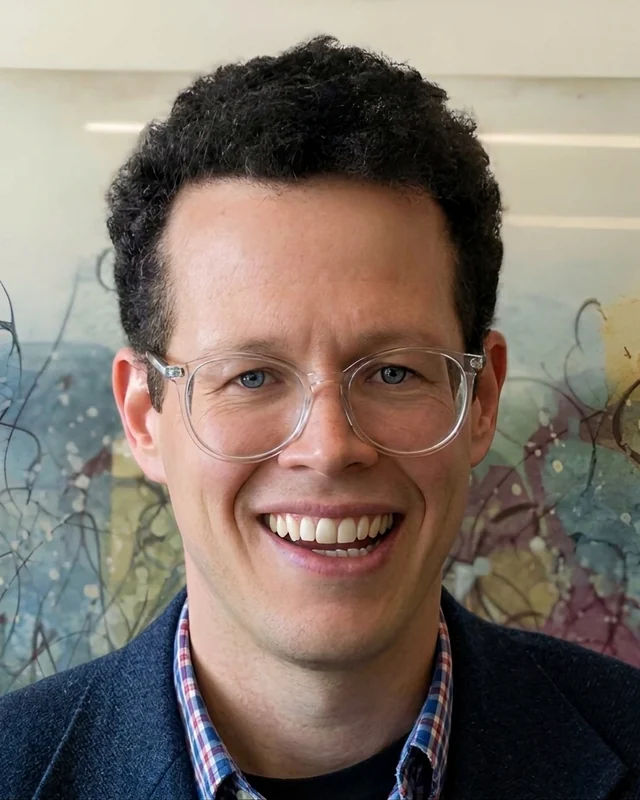
Associate Professor, Department of Pediatrics
Medical College of Wisconsin and Children's Wisconsin
Jamie Hanson is an Associate Professor of Pediatrics at the Medical College of Wisconsin and Children's Wisconsin, and directs TaLE MKE. The research asks how experiences, including stress and family support, relate to brain development, health, and aging. Dr. Hanson's work has been funded by NIMH, NICHD, and the Institute of Education Sciences, and has appeared in research journals like JAMA Pediatrics, Biological Psychiatry, and JAMA Network Open.
Before MCW, Jamie spent ten years at the University of Pittsburgh as an Assistant and then Associate Professor of Psychology, and as a Research Scientist at the Learning Research and Development Center. Jamie did postdoctoral training at Duke and UNC Chapel Hill with Ahmad Hariri and Kenneth Dodge, earned a PhD in Developmental Affective Neuroscience at UW-Madison with Richard Davidson and Seth Pollak, and a BA in Psychology at the University of Pennsylvania.